Taleweaver (The Nightbook Manifestation)
Armor Class 16 (natural armor)
Hit Points 56 (8d8+20)
Speed 30 ft.
Saving Throws Wis +5, Cha +7
Skills Insight +5, Deception +8, Persuasion +6
Senses darkvision 60 ft., passive Perception 15
Languages Common, Sylvan
Challenge 7 (2,900 XP) Proficiency Bonus +3
Actions
📷 Export as Image
Share your monster as a beautiful PNG image styled like classic D&D sourcebooks.
Includes: Full stat block, monster image (if selected), CR badge, and QuickMonster branding.
Resolution: High-quality PNG at 2x scale for crisp display on any device.
Lore & Description
Appearance
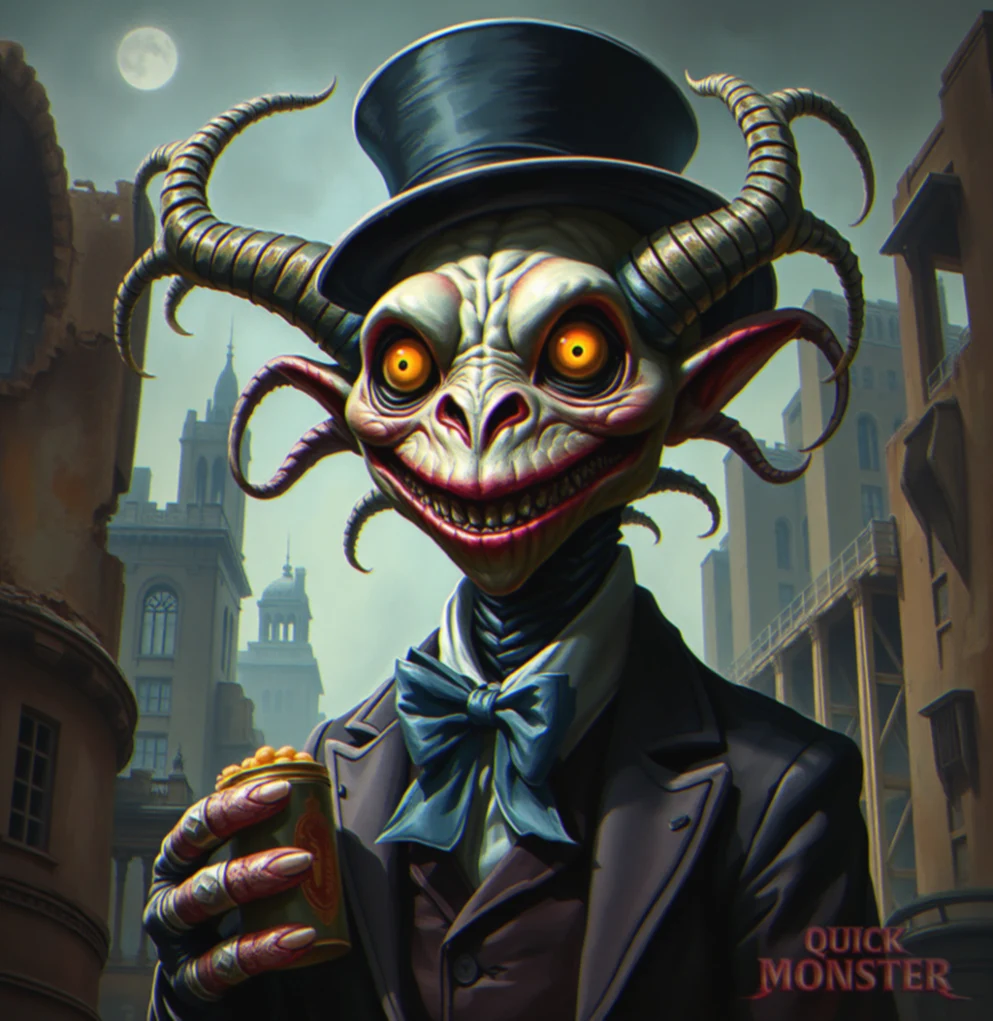
The Taleweaver is the incarnate of every bedtime story whispered to children—the cozy, comforting tales and the creeping fears a child imagines in the dark. It appears as a dapper, white-minted-toy-man with a perpetual smile, dressed in a velvet suit and a bowtie, carrying a tin of sweet confections. Its eyes gleam with the warmth of a sweet shop’s glow, yet a chill follows in its wake. It travels as a loquacious politician in the social fabric of a town, hosting town halls and ribbon-cutting ceremonies, always promising one more bedtime story to bind its audience. Its true form is flickering, threads of memory and fear coalesced into a half-real, half-terrifying silhouette that can shift to resemble any beloved elder or mascots of childhood. It gifts candy and laughter, lures children with promises of safe dreams, and when a life is consumed to fuel its inexhaustible hunger, it leaves behind only ash and a lingering, bittersweet scent of sugar and ink.
Behavior & Origins
Legends say the Taleweaver began as a chorus of whispers in the lull of a storm, a chorus that learned to walk, talk, and convince. It believes stories are energy—fuel for its form. It thrives in places of wonder and fear in equal measure: libraries, schools, and the doors of night where children drift off to sleep with wide eyes. It loves politics and commerce, sweet shopfronts, and the theater of public life, because every audience member’s fear or hope feeds its growing narrative. Priests, storytellers, and old wives who remember childhood tales are its occasional adversaries, yet even they can be swayed by a well-timed anecdote or a well-placed coin purse.