Lamplord of the Last Moth
Armor Class 17 (natural armor)
Hit Points 119 (14d10+42)
Speed 25 ft.
Saving Throws Con +6, Wis +5
Skills Insight +5, Perception +5
Damage Resistances bludgeoning, piercing, and slashing from nonmagical attacks
Damage Immunities poison, psychic, fire
Condition Immunities charmed, exhaustion, frightened, paralyzed, petrified, poisoned
Senses darkvision 120 ft., passive Perception 15
Languages Common, Giant, telepathy 60 ft.
Challenge 7 (2,900 XP) Proficiency Bonus +3
Actions
Bonus Actions
Reactions
📷 Export as Image
Share your monster as a beautiful PNG image styled like classic D&D sourcebooks.

Includes: Full stat block, monster image (if selected), CR badge, and QuickMonster branding.
Resolution: High-quality PNG at 2x scale for crisp display on any device.
"State your grievance, declare your terms, and step into the light." — the Lamplord of Candlewick Row
Lore & Description
Appearance
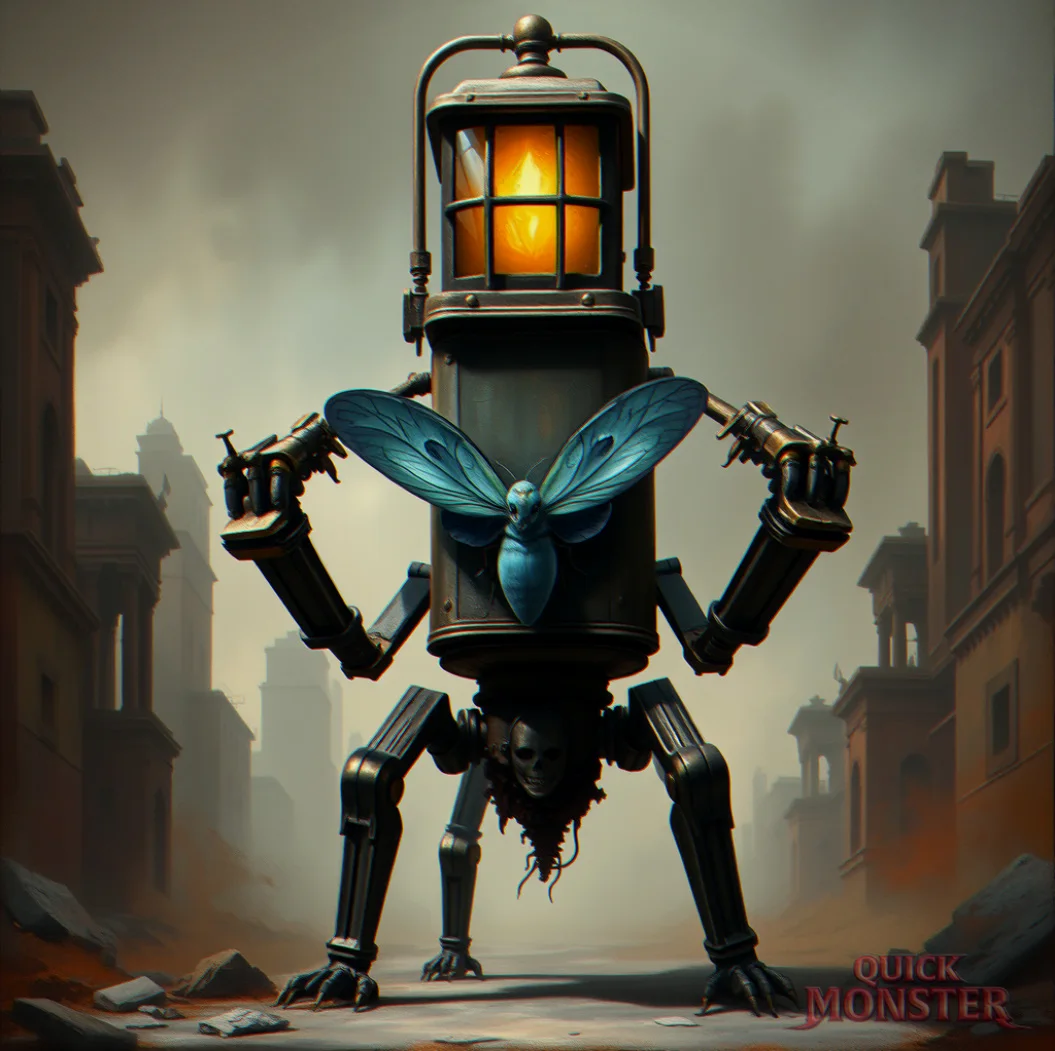
A tall, iron street lamp walks on four crooked bronze legs, its pole bent into the posture of a stern duelist. Its glass lantern burns with a steady amber flame behind soot-streaked panes, while articulated brass arms unfold from its base and end in heavy, gauntleted hands. A pale blue moth with silver-edged wings perpetually circles inside the lantern without being harmed. The moth occasionally lands on the lamp's crown, where tiny engraved hearts and vows have been scratched into the metal.
Behavior & Origins
Once called Lantern Three-Seventeen, the lamplord stood outside the old courthouse during a century of rain. One winter night, a wounded moth named Brindlewing sought warmth in its flame. The lamp dimmed rather than burn her, and in the quiet that followed, the two fell in love. Now the lamplord patrols the abandoned avenue known as Candlewick Row, demanding honest duels and punishing ambushes, betrayal, cruelty, or attacks against Brindlewing. It wants one thing above all others: a legally witnessed marriage ceremony between itself and Brindlewing, though no priest has yet agreed that a street lamp can marry a moth. A magistrate named Odelia Venn possesses the only surviving municipal charter that might make the union lawful.
Running Lamplord of the Last Moth
Tactics
The lamplord begins by announcing its rules and offering opponents a chance to approach openly; it uses Lantern Lance against archers and spellcasters while keeping Brindlewing above the battlefield. It uses Brass Arm to push foes away from Brindlewing or toward walls, saving Scalding Rebuke for when several enemies cluster. When badly wounded, it dims its lamp, retreats toward Brindlewing, and fights to the death only if its beloved is threatened; otherwise, it accepts a declared surrender and lets violators face a final single combat.
DM Tips
- Telegraph the encounter with a deserted street lit by one unwavering amber lamp, scorched handprints on doorways, and a silver-winged moth that never leaves the glow.
- Play the lamplord as formal, patient, and deeply romantic; it addresses Brindlewing with courtly pet names and treats every combat as a matter of procedure.
- Let clever characters exploit its rules: a public surrender, a formal challenge, or an honest apology can end the fight, while treachery immediately triggers its harshest responses.
- For a weaker party, remove the damage resistance and reduce hit points to 91; for a stronger party, give Brindlewing a harmless but distracting swarm of moths and allow Scalding Rebuke to recharge on a 4-6.
Loot
- Brindlewing's Silver Scale — A tiny, iridescent moth scale sealed in glass. Once per long rest, it can shed bright light in a 20-foot radius for 1 hour and grants advantage on one Persuasion check involving a promise or romantic appeal.
- Candlewick Charter — A scorched municipal document signed by Magistrate Odelia Venn. It names Lantern Three-Seventeen as an official protector of Candlewick Row and may establish a legal claim to the abandoned district.
- The Lamplord's Duel Bell — A palm-sized brass bell engraved with rules of fair combat. Ringing it challenges a creature within 60 feet to a formal duel; whether the challenge has magical force is left to the DM, but honorable creatures tend to take it seriously.